19/08/2026
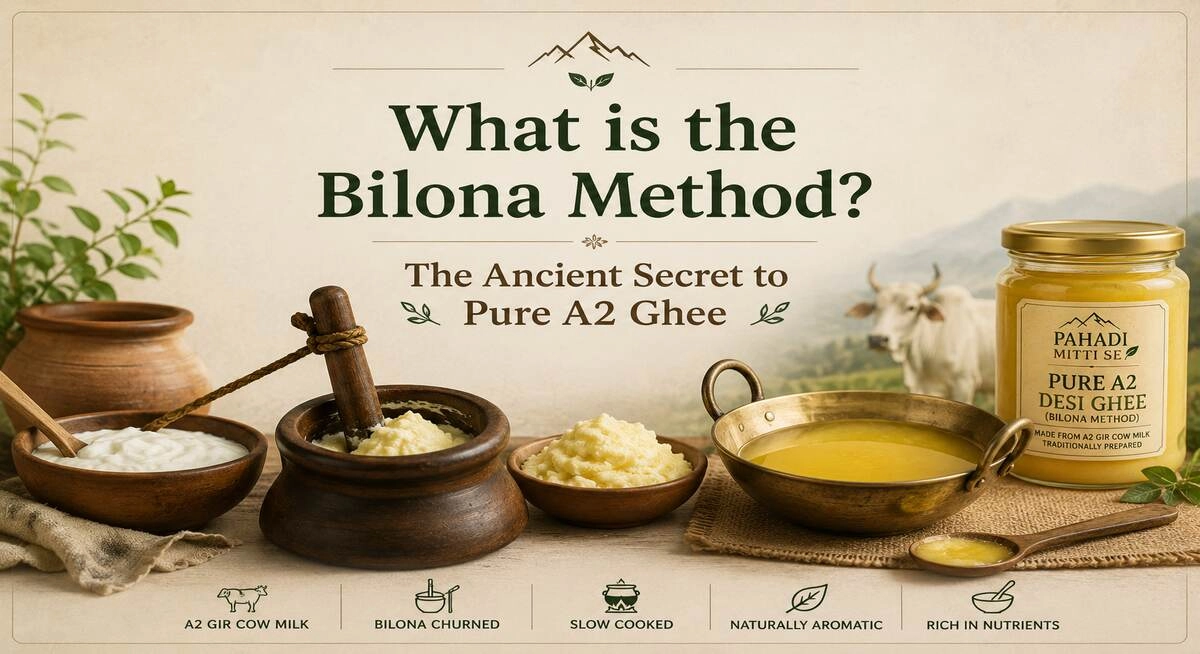
What is the Bilona Method? The Ancient Secret to Pure A2 Ghee
Natural Farm Essentials
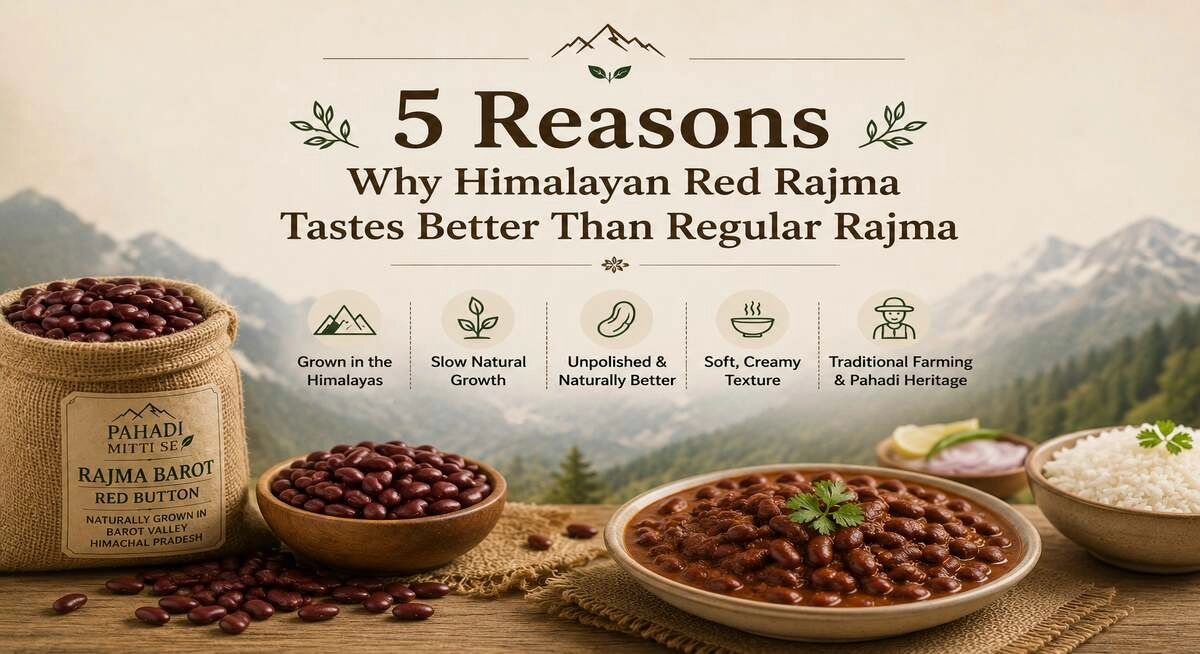
5 Reasons Why Himalayan Red Rajma Tastes Better Than Regular Rajma
by Admin
19/08/2026
5 min read
There are some foods you eat once—and remember for a long time.
Pahadi Rajma is one of them.
If you've ever enjoyed a steaming bowl of Rajma Chawal in the mountains, you may have noticed something different: the beans are tender, the gravy feels creamier, and the flavour has a deep, earthy character that makes you want another serving.
So, what makes Himalayan Red Rajma taste so special?
At Pahadi Mitti Se, our Rajma Barot – Red Button comes from the pristine Barot Valley of Himachal Pradesh. It is naturally grown, unpolished, and known for its rich flavour and creamy texture.
Let's discover the five reasons behind its distinctive taste.
1. Grown in the Himalayan Soil
Great food begins with great ingredients—and great ingredients begin with the land.
The Himalayan regions have unique soil, climate, altitude, and growing conditions. Pahadi Mitti Se highlights the role of high-altitude soil, clean air, and slow natural growth in giving Himalayan rajma its distinctive taste, nutrition, and texture.
The Barot Valley of Himachal Pradesh provides a beautiful mountain environment for traditional crops such as rajma.
This connection to the land is one of the reasons Pahadi Rajma has a character that can feel noticeably different from ordinary commercially grown kidney beans.
The difference begins beneath the soil.
2. Slow Natural Growth Builds Deeper Flavour
In the mountains, nature doesn't rush.
Agriculture in Himalayan regions is shaped by seasons, terrain, altitude, and local farming practices. Pahadi Mitti Se's philosophy focuses on preserving traditional farming knowledge and supporting products connected to Himalayan communities and their landscapes.
This slower growing environment is one of the characteristics associated with Himalayan produce.
For rajma, that translates into beans with a distinctive earthy flavour and satisfying bite—the kind of flavour that works beautifully in a slow-cooked rajma curry.
3. Naturally Unpolished Means More Authentic Character
Look closely at traditional rajma.
It doesn't need to look perfectly identical.
The Rajma Barot – Red Button from Pahadi Mitti Se is described as 100% natural and unpolished, retaining the authentic character of the bean.
Minimal processing helps preserve the natural appearance and character of an agricultural product.
And when you're cooking a traditional dish like rajma, that authentic ingredient can make all the difference.
Less polishing. Less unnecessary processing. More of the original bean.
4. Creamy Texture Makes Every Spoonful Better
Taste isn't only about flavour.
Texture matters.
One of the most enjoyable qualities of Himalayan Barot Rajma is its soft, creamy texture when properly cooked. Pahadi Mitti Se specifically describes its Red Button Rajma as having a soft texture and authentic creamy consistency.
When the beans slowly absorb the spices and tomato-based gravy, they create the rich consistency that makes a classic bowl of Rajma Chawal so comforting.
The result?
Soft beans.
Creamy gravy.
Deep flavour.
And a spoonful of pure mountain comfort.
5. Traditional Farming Preserves the Pahadi Food Experience
Perhaps the most important difference is not something you can see on a label.
It's the connection to tradition.
For generations, Himalayan communities have developed food and farming practices suited to their local environment. Pahadi Mitti Se aims to preserve these connections by working with Himalayan farmers and bringing regional products to customers beyond the mountains.
That's why Pahadi Rajma isn't just another pulse.
It represents a food tradition.
A region.
A farming culture.
And a taste that reminds many people of home.
The Secret Is in the Cooking Too
Even the best rajma needs the right cooking method.
For a delicious Himalayan-style rajma curry:
Step 1 — Soak
Wash the rajma and soak it in plenty of water for several hours or overnight.
Step 2 — Cook Until Tender
Pressure cook or simmer until the beans become completely tender.
Step 3 — Build the Masala
Prepare a traditional onion-tomato masala with ginger, garlic, and your preferred Indian spices.
Step 4 — Let It Simmer
Add the cooked rajma to the masala and allow it to simmer slowly.
This is where the magic happens.
The beans absorb the spices, the gravy thickens, and the flavours come together.
Step 5 — Serve Hot
Serve with steamed rice, jeera rice, or traditional Rajma Chawal.
Add a small spoonful of ghee if you enjoy it.
Simple ingredients. Slow cooking. Mountain flavour.
Why Pahadi Mitti Se Rajma?
At Pahadi Mitti Se, we believe that food should carry a story.
Our Rajma Barot – Red Button is:
🌄 Sourced from Barot Valley
Connected to the Himalayan landscape of Himachal Pradesh.
🌱 Naturally Grown
Produced as part of traditional Himalayan agriculture.
🥣 Unpolished
Kept closer to its natural form.
💪 Naturally Rich in Protein & Fiber
A wholesome pulse for everyday meals.
😋 Rich & Creamy in Texture
Perfect for traditional rajma curry.
🤝 Connected to Himalayan Farmers
Part of our mission to make authentic regional products more accessible while respecting the communities and traditions behind them.
More Than Rajma. It's a Taste of the Mountains.
What makes Himalayan Red Rajma special isn't one magical ingredient.
It's the land, the climate, the variety, the farming traditions, the careful sourcing, and the way it is cooked.
From the mountain farms of Barot Valley to a steaming bowl of Rajma Chawal at your dining table, every bean carries a small part of the Himalayan story.
So, the next time you cook rajma, don't just ask:
“Which rajma should I buy?”
Ask:
“Where did my rajma come from?”
Because sometimes, the difference in taste begins long before the cooking begins.
Bring the Taste of Barot Valley Home
Categories
Popular Posts
 NEW
NEW
 NEW
NEW
 NEW
NEW
Natural Farm Essentials
Natural Farm Essentials
Natural Farm Essentials
Natural Farm Essentials