

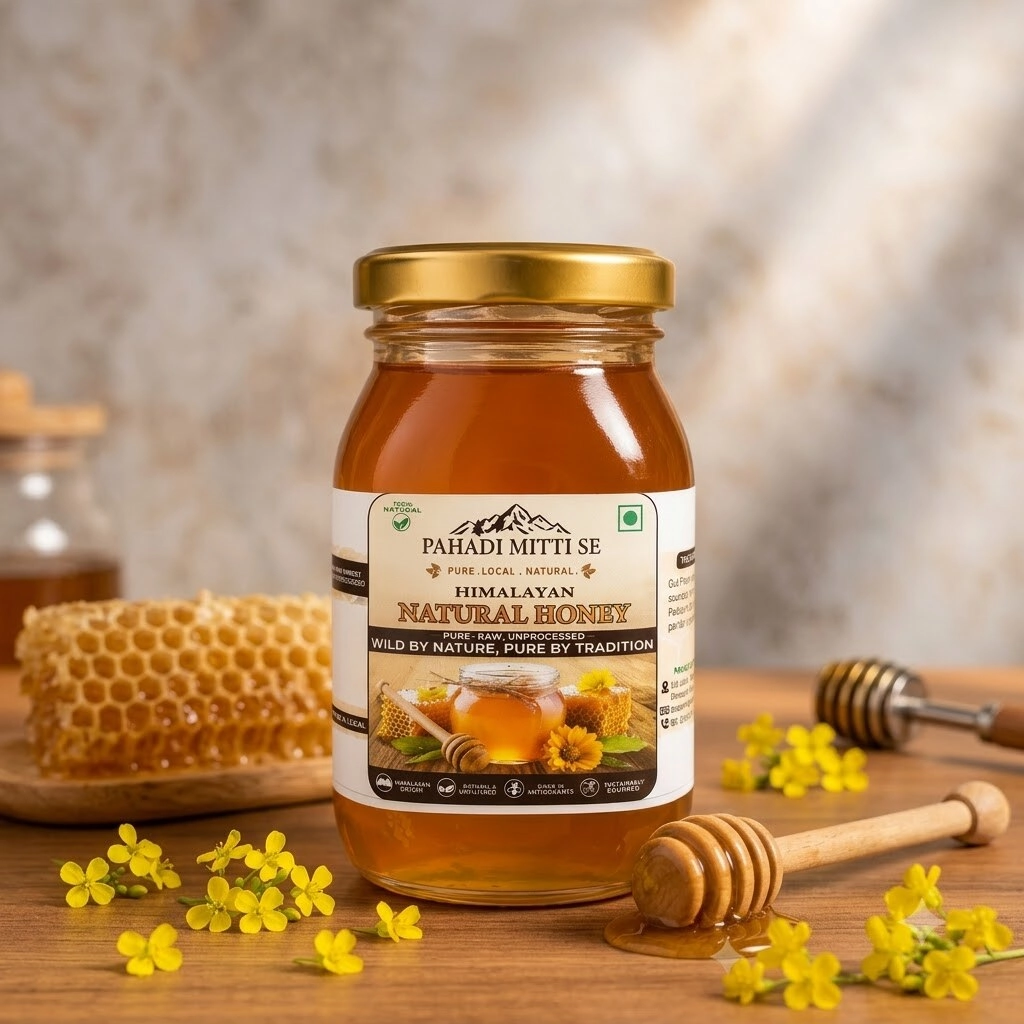
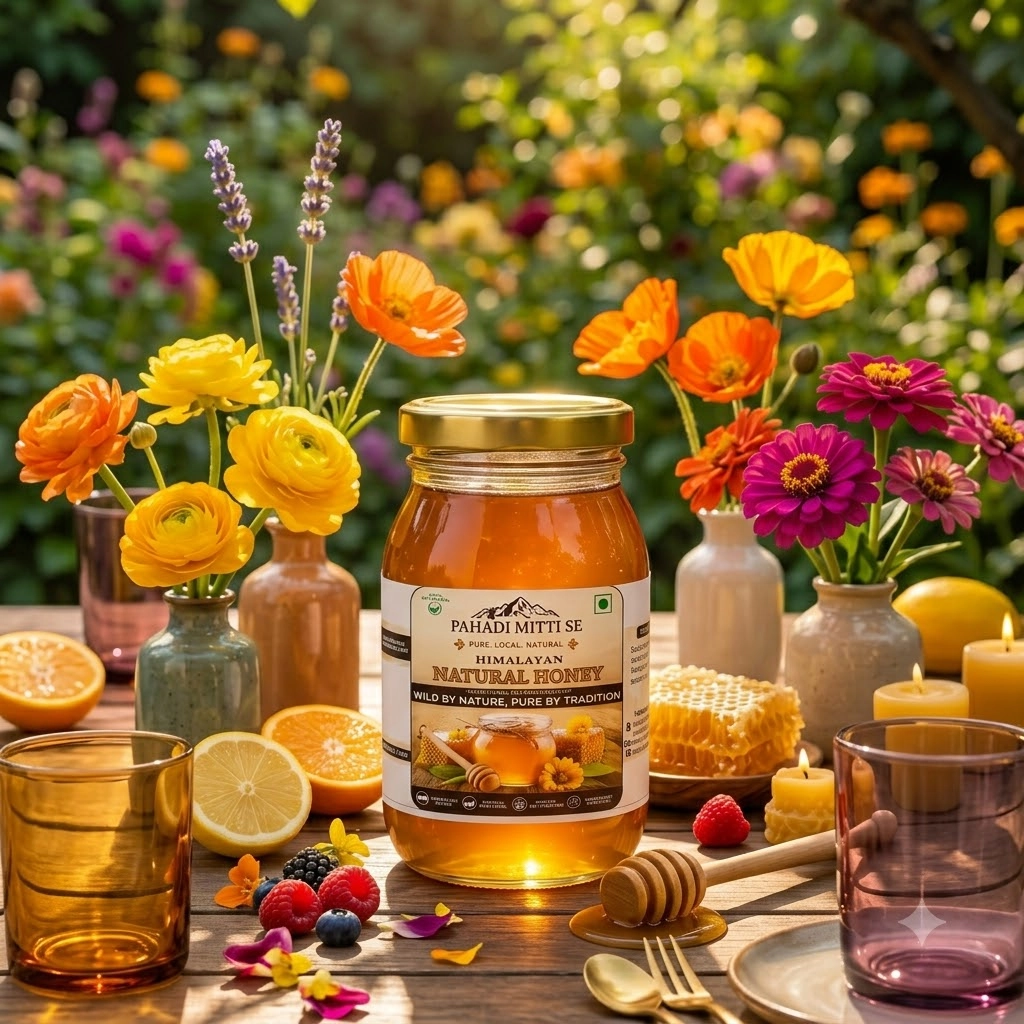
Himalayan Natural Honey – Pure, Raw & Unprocessed
100% pure wild forest honey sourced from high altitude valleys of Himalayas. Naturally sweet and nutrient-dense.
₹1,249 ₹1,099 12% OFF
Ratings & Reviews
0.0
0 Total Ratings
Please Login to write a review.
Himalayan Natural Honey from Pahadi Mitti Se is sourced from Himalayan Honey Harvesters in the Himalayan region, where bees collect nectar from a diverse range of seasonal flowers and plants.
With its naturally golden colour, distinctive floral aroma and rich sweetness, this honey brings the character of the Himalayan landscape to your everyday meals. Its flavour, colour and texture may naturally vary depending on the floral source, season and location—a characteristic of naturally sourced honey.
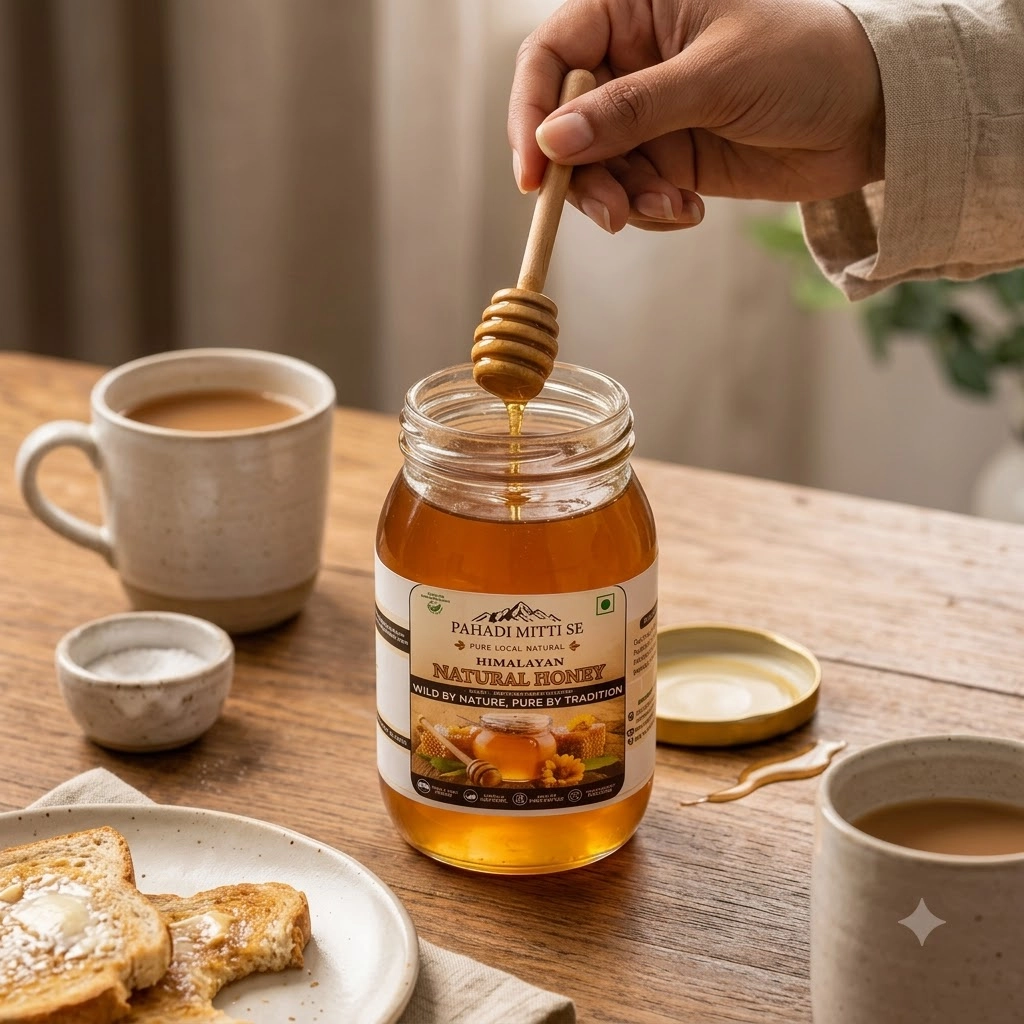
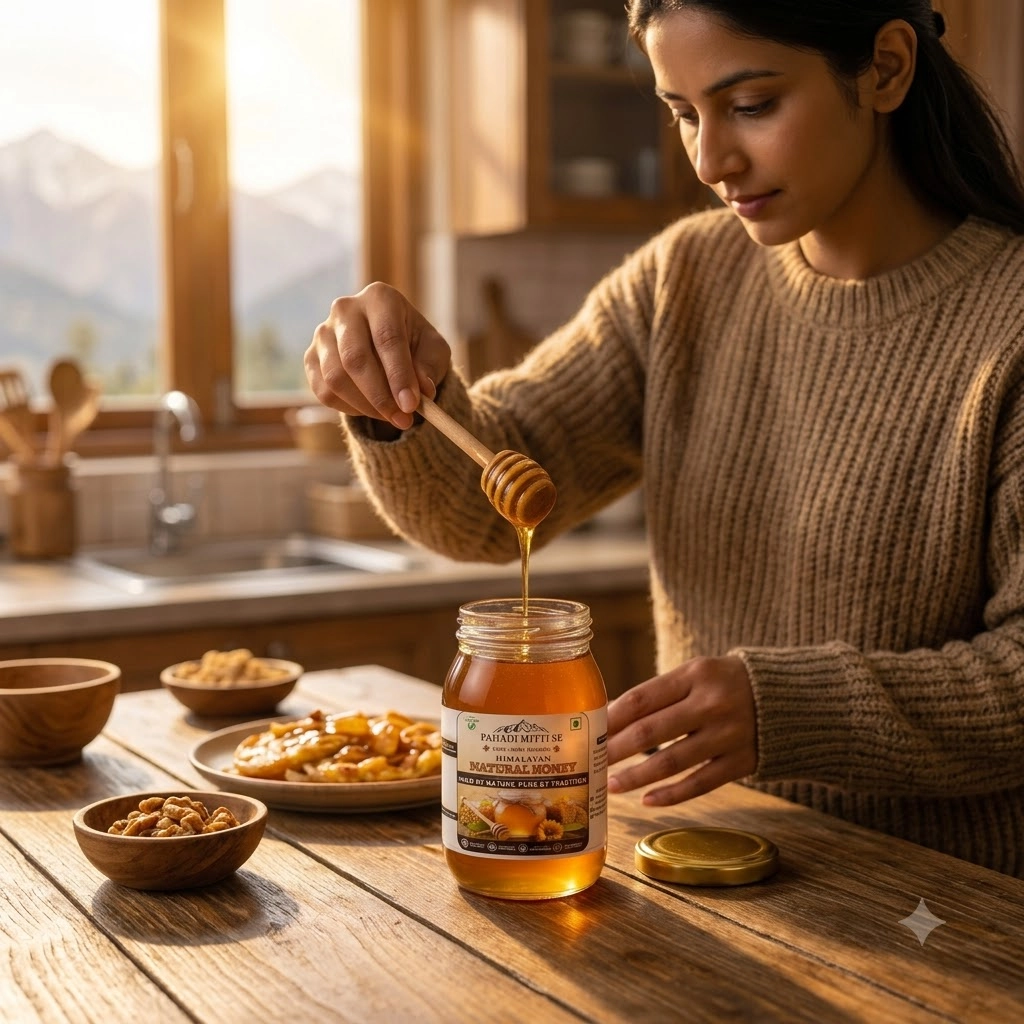
Carefully sourced and packed, our honey is a versatile natural sweetener that can be enjoyed with tea, warm water, milk, breakfast foods, desserts, fruits, or directly by the spoonful.
At Pahadi Mitti Se, we focus on connecting customers with traditionally sourced Himalayan products while keeping the story of their origin and communities at the heart of what we offer.
Why Choose Pahadi Mitti Se Himalayan Honey?
- 🏔️ Himalayan Origin
- 🌼 Collected from diverse floral sources
- 🍯 Naturally rich flavour and aroma
- 🐝 Sourced from Himalayan Honey Harvesters
- 🌿 Minimal processing approach
- 📦 Carefully packed for everyday use
- ☕ Ideal as a natural sweetener
Transparency Tracker: Himalayan Origin
Every product we sell is traced directly back to the pristine altitudes of the Himalayas. We believe you have a right to know exactly where your food comes from.
High Altitude Sourcing
Sourced from elevations above 5,000 ft, ensuring natural purity.
Direct from Farmers
We work directly with local Himachali communities.
Zero Chemicals
Absolutely no synthetic pesticides or fertilizers.
Traditional Processing
Time-honored methods like Bilona churning.
- Raw & Unprocessed Wild Honey
- Sourced from deep Himalayan forests
- Natural immunity booster
- Rich in antioxidants and nutrients
- Zero added sugar or preservatives
The Raw Honey Difference
Sourced sustainably from wild hives in high-altitude Himalayan ranges. Extracted without heat to preserve the natural pollen, enzymes, and medicinal properties.
Learn more🌼 Naturally Rich Flavour
The diverse floral sources found in mountain regions can contribute to honey's distinctive aroma, taste and colour.
🍯 A Natural Sweetener
Honey can be used as an alternative sweetening ingredient in beverages, breakfast foods and desserts.
🌿 Contains Naturally Occurring Compounds
Honey naturally contains various compounds, including small amounts of vitamins, minerals and antioxidant compounds. The exact composition can vary according to floral source and season.
🥣 Versatile Everyday Ingredient
Use it with oatmeal, fruits, yoghurt, toast, smoothies, desserts or homemade recipes.
☕ Perfect for Beverages
Add it to tea, warm water or other beverages for natural sweetness and a pleasant floral flavour.
Note: Honey is primarily a source of sugars and should be consumed in moderation as part of a balanced diet.
1. Floral Nectar Collection
Honey bees collect nectar from flowers and plants available in their surrounding Himalayan environment.
2. Natural Honey Formation
Bees transform and store the collected nectar inside honeycombs, where it gradually develops into honey.
3. Honey Extraction
The honey is carefully extracted from the honeycomb while taking care to preserve its natural characteristics.
4. Filtering
The extracted honey may be gently filtered to remove visible wax particles and other unwanted material, depending on the processing method used.
5. Hygienic Packing
The selected honey is filled into food-grade containers and packed for delivery.
From Himalayan flowers to your jar — a naturally sweet journey shaped by bees, flowers, beekeepers and the mountain environment.
It is noted that honey can naturally vary in colour, aroma, texture, sweetness and crystallization depending on source and season.
How to Use Himalayan Natural Honey
Morning: Add to warm water or your preferred morning beverage.
Breakfast: Drizzle over oats, yoghurt, fruits or toast.
Tea: Use as a natural sweetener in tea or herbal infusions.
Desserts: Add to homemade desserts and recipes.
Smoothies: Blend with fruits, milk or yoghurt.
Directly: Enjoy a small amount on its own if preferred.
1. What is Himalayan Natural Honey?
Himalayan Natural Honey is honey sourced from beekeepers in Himalayan regions, where bees collect nectar from available flowers and plants.
2. Where does this honey come from?
Our honey is sourced from the Himalayan region through honey harvesters and sourcing partners. The exact floral profile may vary according to season and location.
3. Why can the colour of honey vary?
Natural honey can range from light golden to darker shades. Colour can vary according to the floral source, season and geographic origin.
4. Why does honey sometimes crystallize?
Crystallization is a natural process that can occur in honey and does not necessarily mean that the honey has spoiled. The rate and appearance of crystallization can vary depending on the honey's floral source and composition.
5. Is crystallized honey safe to eat?
Yes. Natural crystallization does not by itself indicate spoilage. If the honey has been stored properly and shows no signs of contamination or spoilage, crystallization is generally a natural change in texture.
6. How should I store Himalayan Honey?
Keep the jar tightly closed in a cool, dry place, away from direct sunlight and moisture. Refrigeration is generally not necessary.
7. Can I use Himalayan Honey in tea?
Yes. Honey can be used as a natural sweetener in tea and other beverages.
8. Can children consume honey?
Honey should not be given to children under 12 months of age because of the risk of infant botulism.
9. Does the flavour remain the same in every batch?
Not necessarily. Since natural honey can come from different floral sources and harvest periods, flavour, aroma, colour and texture may vary naturally from batch to batch.
10. Is Himalayan Honey suitable for everyday use?
Honey can be included as part of a balanced diet, but it is still a source of sugars, so moderate consumption is recommended.